---
title: Due Dates
description: There are various ways that you can set due dates for your invoices in Paycove. An invoice status (e.g. Unpaid, Overdue) will automatically update based on the set due date and whether your client has
---
[Skip to content](https://help.paycove.io/knowledge/due-dates#main-content)
[Contact us](https://help.paycove.io/knowledge/kb-tickets/new)
[![paycove\_logo\_explore\_nautical\_wide-08.svg\]](https://help.paycove.io/hubfs/Imported%20images/paycove_logo_explore_nautical_wide-08.svg)](https://www.paycove.io/)
- [FAQs](https://help.paycove.io/knowledge/frequently-asked-questions)
- [Help Articles](https://help.paycove.io/knowledge/help-articles)
Open main navigation
Close main navigation
- [FAQs](https://help.paycove.io/knowledge/frequently-asked-questions)
- [Help Articles](https://help.paycove.io/knowledge/help-articles)
- [Contact us](https://help.paycove.io/knowledge/kb-tickets/new)
- [Go to paycove.io](https://www.paycove.io/)
[Go to paycove.io](https://www.paycove.io/)
Hi there. How can we help you?
- There are no suggestions because the search field is empty.
1. [Help Center](https://help.paycove.io/knowledge)
2. [Help Articles](https://help.paycove.io/knowledge/help-articles)
3. [Customizing Templates](https://help.paycove.io/knowledge/help-articles#customizing-templates)
# Due Dates
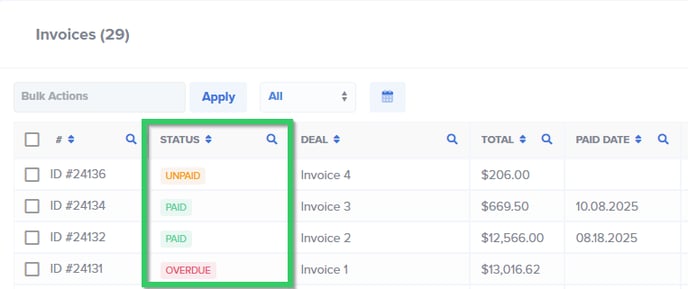
There are various ways that you can set due dates for your invoices in Paycove. An invoice status (e.g. Unpaid, Overdue) will automatically update based on the set due date and whether your client has paid the invoice on time. This will be reflected on the Invoice table as well as within the invoice itself.
#### 
#### Account Level
Rules set on the account level will apply to all invoices across your Paycove account unless they are modified on a more specific level (namely, on the template or individual invoice level). To set or change the default due date on your account, navigate to the **[Account](https://paycove.io/admin-profile)** page. Just enter a number of days and select a reference point to set the due date from. Be sure to click **Save** when you're done.
#### 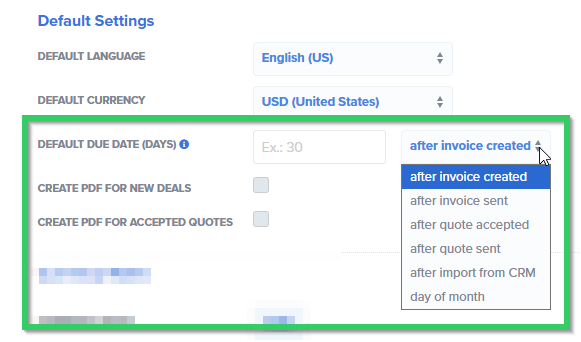
> ***Note:** If you leave this area blank with "Ex. 30" still showing, then there will be **no** default due date set on the account level. A value needs to be chosen here for the due date to apply.*
#### Template Level
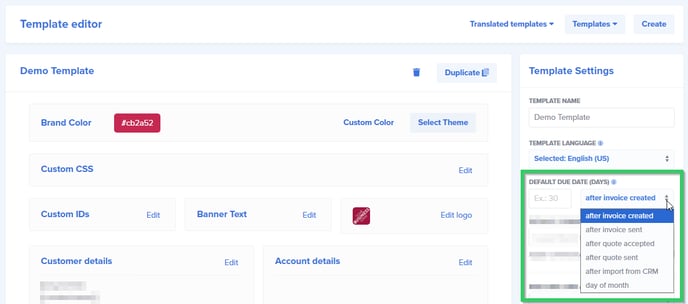
Due dates set on a template will override the account level due date. Just open up one of your existing **[templates,](https://paycove.io/invoice-template)** or create a new template you'd like to edit. In the **Template Settings** panel on the right, you can set a **default due date** for any invoice assigned to that template. Choose the number of days, and set the reference point. Click **Save** when you're done.
#### 
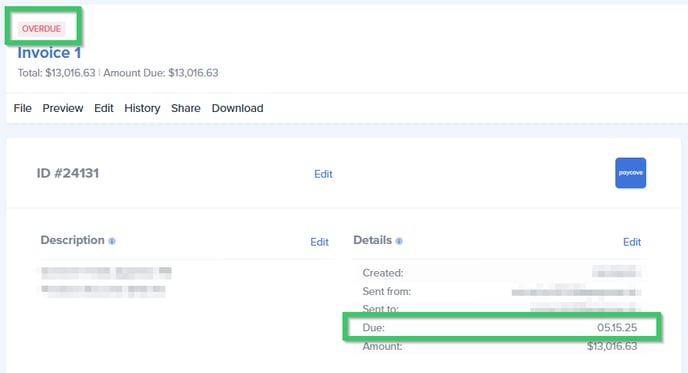
Here's how the due date will look on the invoice, after being set in the template. We've chosen an exact date in this example:
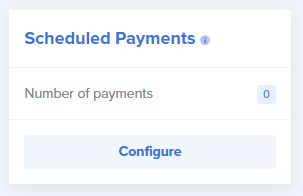
> ***Important:*** If you are using **scheduled payments, do not** set a due date this way in the template. Instead, use the Scheduled Payments modal found further down in the template editor. To learn more about scheduled payments, **[check out this article.](https://help.paycove.io/knowledge/scheduled-payments-split-payments-and-auto-billing)**
#### 
#### Individual Invoice Level
Due dates created on individual invoices will override the default due date created on the account or template level.
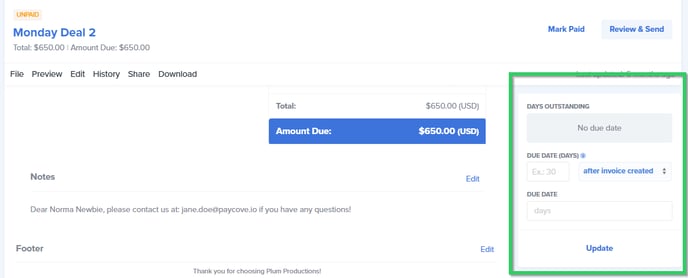
To edit a single invoice's due date, open the invoice of your choice in Paycove and go to the section titled **Days Outstanding** on the right. You can choose a specific due date, or the number of days the invoice is due after the selected reference point. Click **Update** when you're done.
#### 
#### Will customers know when an invoice is overdue?
If you have **Automatic Reminders** set up on the **[Email page,](https://paycove.io/notification-templates)** then they will automatically receive an email that their invoice is going to be due soon, or is overdue, based on your settings. **[See this article](https://help.paycove.io/knowledge/email-notifications)** to learn more about automated email reminders.
#### Displaying Due Dates in Other Locations on Your Invoices
You can **[display the due date anywhere on your invoice](https://help.paycove.io/knowledge/liquid-variables-and-dynamic-fields)** by adding this Liquid variable to the template or invoice section that you'd like to display a quote or invoice's due date:
```
{{deal.invoice_due_date}}
```
Have more questions on due dates? Don't hesitate to reach out to us at support@paycove.io, and we'd be glad to help.
- [Help Articles](https://help.paycove.io/knowledge/help-articles#main-content)
- [Getting Started and Integrations](https://help.paycove.io/knowledge/help-articles#getting-started-and-integrations)
- [Customizing Templates](https://help.paycove.io/knowledge/help-articles#customizing-templates)
- [Managing Quotes and Invoices](https://help.paycove.io/knowledge/help-articles#managing-quotes-and-invoices)
- [Products and Subscriptions](https://help.paycove.io/knowledge/help-articles#products-and-subscriptions)
- [Payments, Taxes, and Fees](https://help.paycove.io/knowledge/help-articles#payments-taxes-and-fees)
- [Account Settings](https://help.paycove.io/knowledge/help-articles#account-settings)
- [Other Help Articles](https://help.paycove.io/knowledge/help-articles#other-help-articles)
- [Frequently Asked Questions](https://help.paycove.io/knowledge/frequently-asked-questions#main-content)
- [Managing Quotes and Invoices](https://help.paycove.io/knowledge/frequently-asked-questions#managing-quotes-and-invoices)
- [Integrations](https://help.paycove.io/knowledge/frequently-asked-questions#integrations)
- [Payments](https://help.paycove.io/knowledge/frequently-asked-questions#payments)
- [Account Settings](https://help.paycove.io/knowledge/frequently-asked-questions#account-settings)
- [Pricing and Plans](https://help.paycove.io/knowledge/frequently-asked-questions#pricing-and-plans)
- [Other](https://help.paycove.io/knowledge/frequently-asked-questions#other)
[](https://www.paycove.io/)
[mailto:support@paycove.io](mailto:support@paycove.io)
Copyright © 2026, Paycove